Last Update:
Looking for the complete reference? See the CORE SARMs Handbook, which profiles every compound in one place.
What Is a Cutting Stack and Why Do People Use One?
Cutting means losing body fat while keeping as much muscle as possible. The difficulty is that a calorie deficit pushes the body towards using muscle as well as fat for energy. Training intensity tends to drop, hunger rises, and metabolism adapts to the lower intake. Sports nutrition research recommends a moderate rate of weight loss, protein intake that stays high and continued resistance training for exactly this reason.[4]
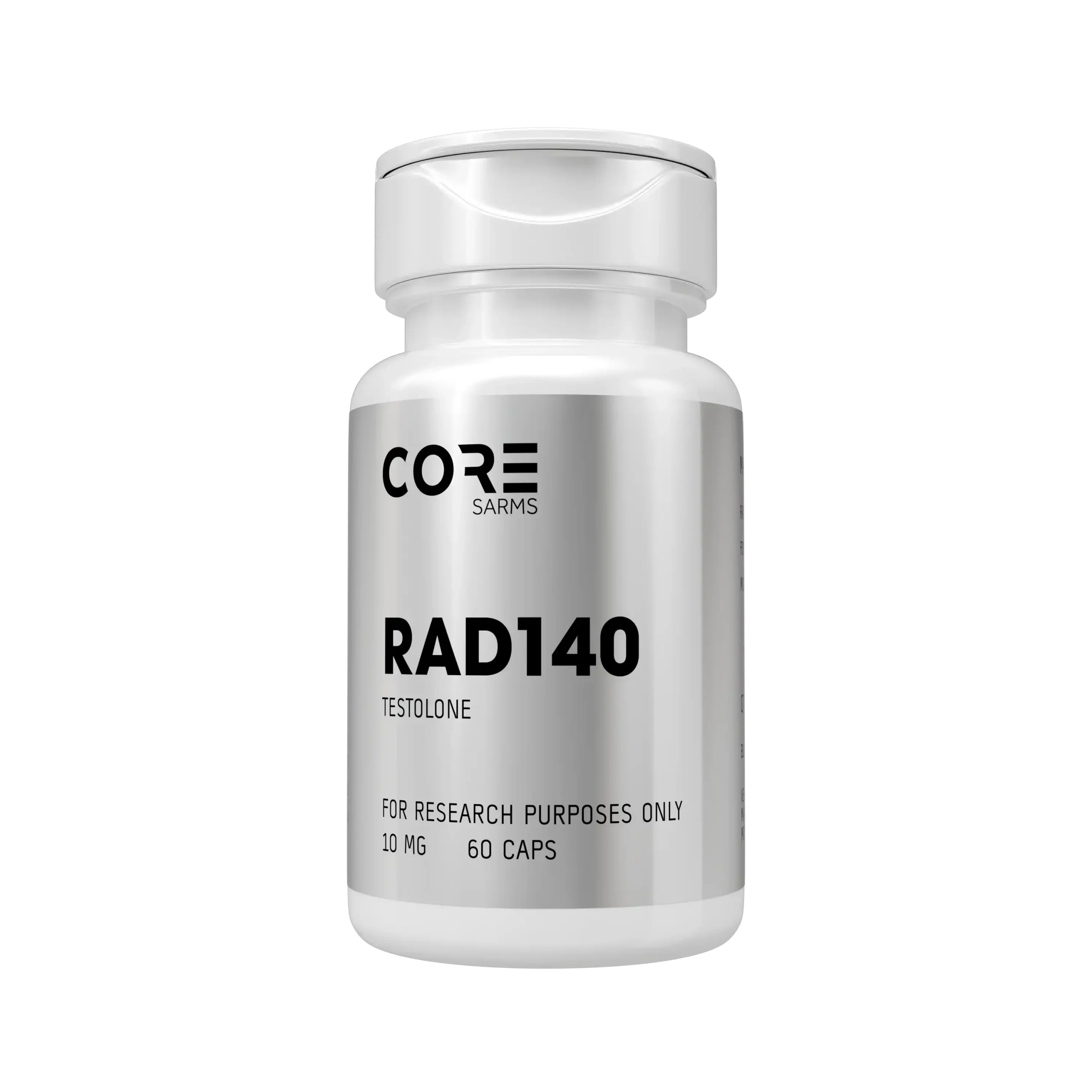
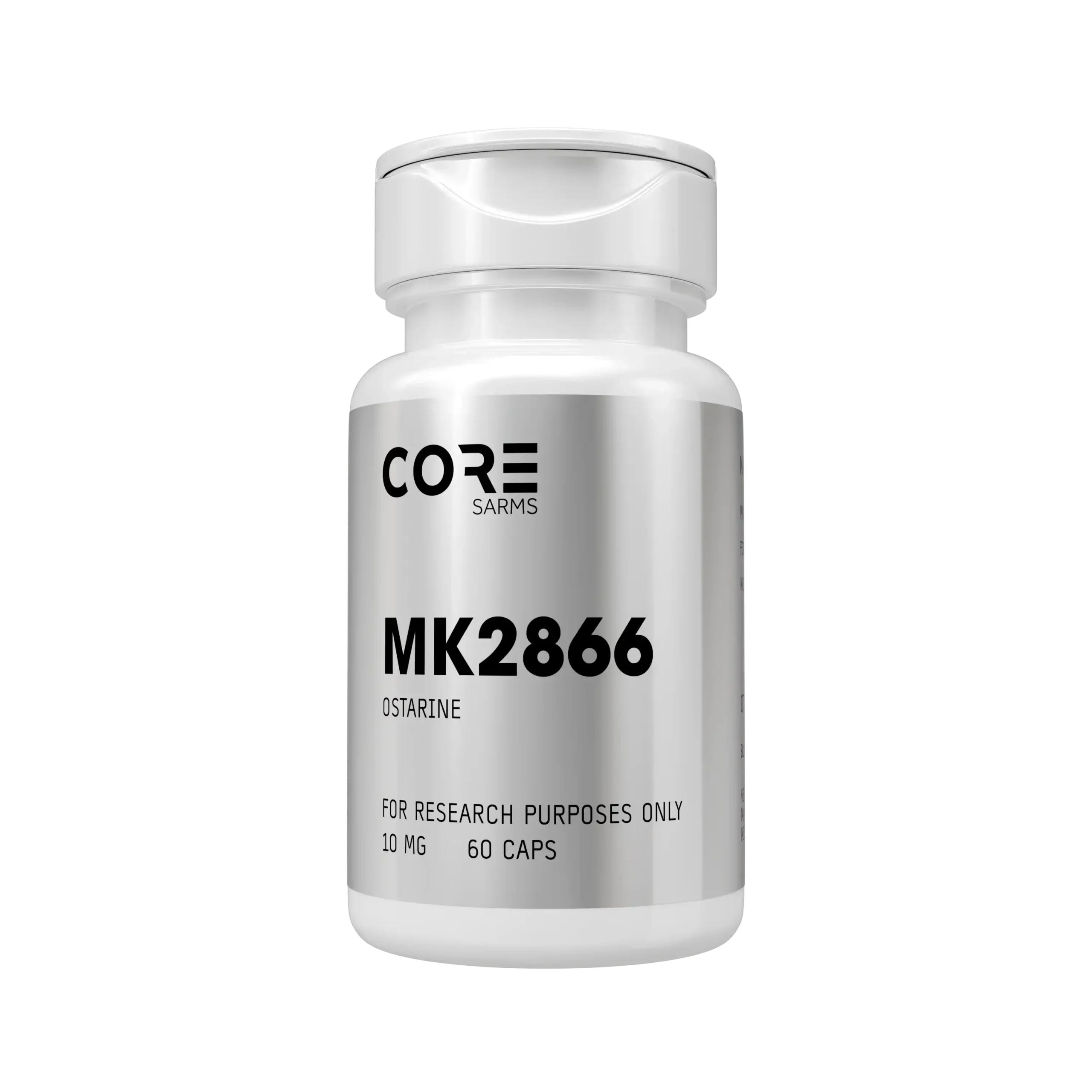
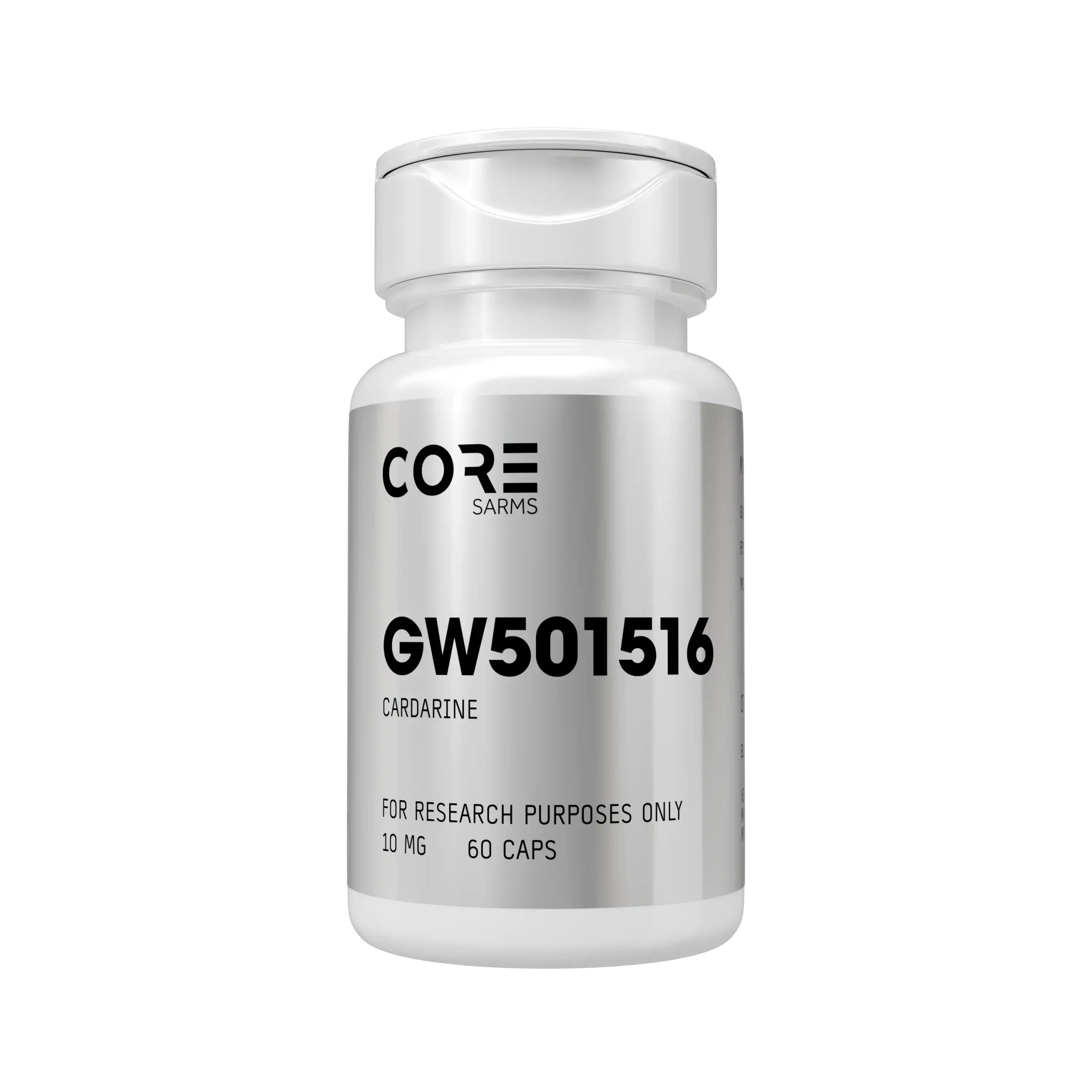
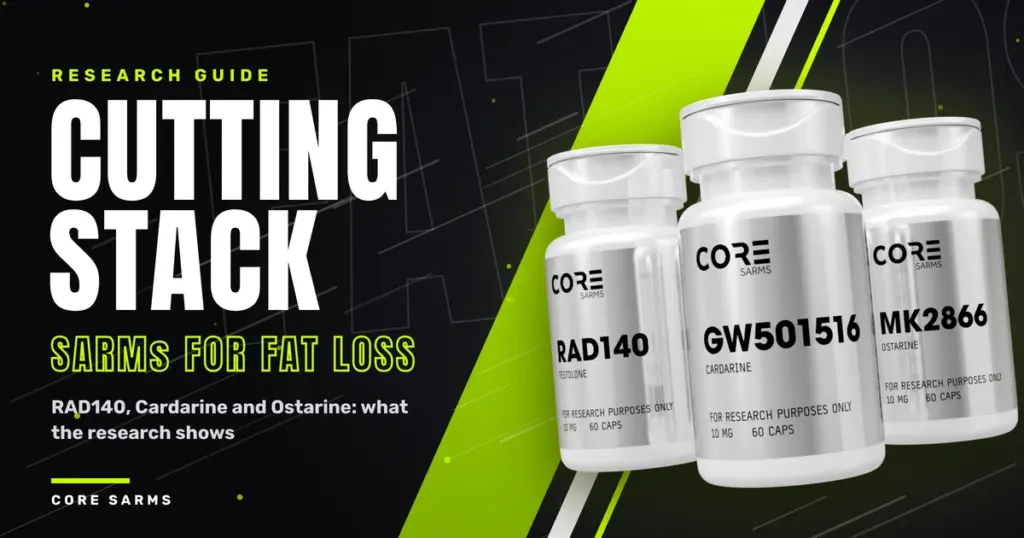
A cutting stack is a combination of compounds chosen to support those goals. The most common combination uses three compounds with different jobs: Ostarine (MK2866) for muscle preservation, RAD-140 (Testolone) for strength and muscle retention, and Cardarine (GW501516) for fat metabolism and endurance. None of them replaces a calorie deficit or a training plan. They are used alongside both.
If you prefer the three compounds in one order, the CORE Cutting Bundle contains one 60-capsule bottle of each, with 10 mg per capsule.
The Three Compounds in a Cutting Stack
Ostarine (MK2866): muscle preservation
Ostarine is a selective androgen receptor modulator (SARM) and one of the milder compounds in its class. It is best known for helping to hold on to muscle during a calorie deficit. Clinical trials have reported gains in lean body mass and better physical function compared with placebo.[1] For doses, results and side effects in detail, see our Ostarine guide, or go straight to the Ostarine product page.
RAD-140 (Testolone): strength and muscle retention
RAD-140 is a stronger SARM, used when the priority is keeping strength and a full look to the muscles while dieting. Preclinical studies in rats and non-human primates reported anabolic activity in muscle and bone with reduced activity in the prostate.[3] Because it has a stronger effect on natural testosterone than Ostarine, post-cycle support is part of the plan. Read the RAD-140 guide or see the RAD-140 product page.
Cardarine (GW501516): fat metabolism and endurance
Cardarine is not a SARM. It activates the PPAR delta receptor, which regulates how muscle uses fat for fuel. In a small two-week trial in healthy, moderately overweight adults, 10 mg of GW501516 a day increased fat oxidation after a meal.[2] In practice, people use it to support conditioning and stamina in the gym, particularly during cardio and high-rep work. Details are on the Cardarine product page.
How the Stack Fits Together
Each compound covers a different part of the cut, which is why they are combined instead of run alone. The table summarises the protocol used for the CORE Cutting Bundle.
| Compound | Role in a cut | Daily amount | Timing |
|---|---|---|---|
| Ostarine (MK2866) | Muscle preservation | 10 mg | Morning, with breakfast |
| RAD-140 (Testolone) | Strength and muscle retention | 10 mg | Morning, with breakfast |
| Cardarine (GW501516) | Fat metabolism and endurance | 10 mg | 1 to 2 hours before training |
Amounts and timing follow the usage listed on the product pages. Not every combination suits every person, so start with the compounds you understand best. If you are new to this, begin with the Complete Beginner’s Guide to SARMs.
Cutting Stack Dosing and Timing
The protocol on the Cutting Bundle page is simple. Take Ostarine and RAD-140, 10 mg each, together in the morning with breakfast. Take Cardarine, 10 mg, one to two hours before training. Keep the timing the same every day so levels stay steady.
The stack runs for a maximum of 6 to 8 weeks. That is shorter than the 8 to 12 weeks listed for Ostarine on its own, because RAD-140 and Cardarine both have shorter recommended cycles, and the stack follows the shortest one. After the cycle, plan a break and post-cycle support before considering another run (see below).
Training for a Cut
Training sends the signal that tells your body to keep its muscle, so the plan matters as much as the compounds. A practical weekly structure looks like this:
- Weight training, 4 to 5 days a week. Stay with heavy compound lifts. Aim to keep your strength rather than chase new records.
- Moderate cardio, 3 to 4 sessions a week. Steady cardio burns calories without eating into recovery.
- HIIT, 2 to 3 short sessions. Use these sparingly, because they add fatigue.
- Rest and sleep. Recovery is where muscle is protected, and it gets harder in a deficit.
A common mistake is to replace lifting with cardio. Combine heavy lifting with moderate cardio, and keep lifting heavy throughout the cut.
Nutrition for a Cut
No compound works without a calorie deficit. A deficit of around 300 to 500 calories a day is a common starting point. Keeping the rate of weight loss moderate instead of aggressive helps protect muscle.[4] Weigh your food for the first few weeks and log it in an app such as MyFitnessPal or Cronometer. Estimates by eye are usually wrong.
Keep protein high. A daily intake of around 1.6 to 2.2 grams per kilogram of body weight is a widely used range for people who train with weights, and higher intakes are often used during a deficit.[4] [5] Spread it across three or four meals, add plenty of fibre and vegetables for fullness, and drink enough water.
Hunger is the hardest part of most cuts. Keep your attention busy with a goal outside of food, such as a training target or a hobby, and protect your sleep. Many people find that planned, repeatable meals work better than constant decisions.
What to Expect During a Cut
Results depend on your starting body fat, the size of your deficit and how consistent your training is. As a rough guide, the first two weeks are usually about performance: steady energy and strength held in the gym. Visible changes tend to appear around weeks three to four, when the scale, photos and waist measurement start to move together. In the later weeks, definition improves as body fat falls, provided strength stays stable.
If your lifts drop quickly or you feel run down, the deficit is probably too large. Add calories before changing anything else.
Tracking Your Progress
What you measure decides what you can adjust. Check the same things at the same time each week:
- progress photos in the same light and pose
- body weight and waist measurement, or a body fat estimate
- your main lifts, to see whether strength is holding
- energy, sleep and mood
Consider baseline blood work before you start and again after the cycle, so you can see how your body responds.
Side Effects and Post-Cycle Planning
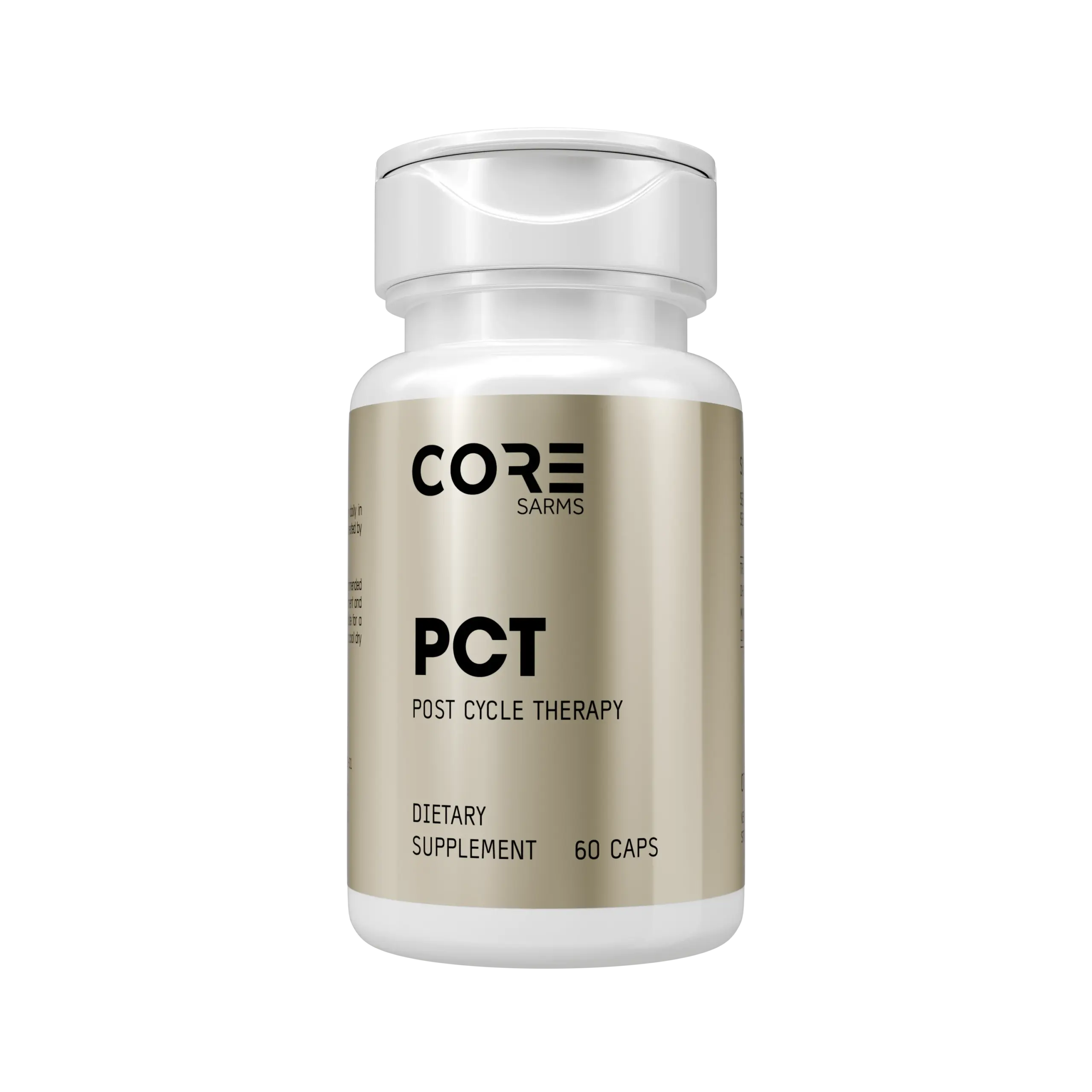
The three compounds differ in how they affect natural hormones. Ostarine has a mild to moderate effect, RAD-140 a stronger one, and Cardarine does not suppress testosterone. For that reason the Cutting Bundle page lists post-cycle support as required for the RAD-140 part of the stack. Our guides cover the details: what is post-cycle therapy, the PCT product, and SARMs side effects.
After the cycle, return calories to maintenance gradually rather than all at once, keep training consistently, and consider a maintenance phase before the next cut. Give your body time to recover before you plan another cycle.
Common Cutting Mistakes
- Cutting too hard. An aggressive deficit costs muscle and training quality.
- Dropping heavy lifting. Without it, the body has no reason to keep muscle.
- Doing too much cardio. Extra sessions add fatigue and eat into recovery.
- Not tracking. Without numbers you cannot tell what is working.
- Ending the diet early. A cut takes weeks, and results build late in the process.
- Using untested products. You cannot manage a cut around a capsule whose contents you do not know.
Choosing a Quality Cutting Stack
Look for an independent, third-party lab certificate for each compound, a clear label with the strength of each capsule, and test results you can check yourself. At CORE, results are published on our lab tests page. If you want to understand what a certificate shows, read our certificate of analysis guide and the quality control guide.
You can order the three compounds together as the Cutting Bundle, or buy them separately: Ostarine, RAD-140 and Cardarine. If your goal is to build muscle instead of lose fat, read our guide to SARMs for bulking.
Conclusion
A cutting stack works best as one part of a plan. Ostarine, RAD-140 and Cardarine cover muscle preservation, strength and fat metabolism, while the deficit, the training and the recovery do the main work. Keep the cycle within 6 to 8 weeks, track your numbers, and plan the weeks after it before you start. To get the three compounds in one order, see the Cutting Bundle.