



SARM Fundamentals
Comprehensive understanding of Selective Androgen Receptor Modulators and their mechanisms.
Understanding Androgen Receptors
Androgen receptors (ARs) are nuclear hormone receptors that play crucial roles in various physiological processes, including muscle growth, bone density maintenance, and metabolic regulation. These receptors are found throughout the body, with particularly high concentrations in skeletal muscle, bone tissue, and reproductive organs.
The Androgen Signaling Pathway
When activated, androgen receptors undergo conformational changes that allow them to:
- Translocate to the cell nucleus
- Bind to androgen response elements (AREs) in DNA
- Regulate transcription of target genes
- Promote protein synthesis and cellular growth
What Are SARMs?
SARMs are synthetic compounds designed to selectively bind to and activate androgen receptors in specific tissues, primarily muscle and bone, while avoiding activation in other tissues such as the prostate or liver. This selectivity is achieved through their unique chemical structures and binding mechanisms.
Key Characteristics of SARMs
Tissue Selectivity
Unlike traditional anabolic compounds, SARMs demonstrate preferential binding to androgen receptors in anabolic tissues (muscle and bone) while showing reduced activity in androgenic tissues.
Oral Bioavailability
Most SARMs are orally active, making them more convenient for administration compared to injectable alternatives.
Reduced Side Effects
The selective nature of SARMs theoretically reduces the risk of unwanted side effects commonly associated with non-selective androgen receptor activation.
Classes of SARMs
First-Generation SARMs
Ostarine (MK-2866)
- Originally developed for muscle wasting conditions
- Demonstrates strong anabolic activity in muscle tissue
- Excellent safety profile in preclinical studies
- Half-life: 24 hours
Ligandrol (LGD-4033)
- High oral bioavailability
- Strong binding affinity for androgen receptors
- Significant muscle and bone anabolic effects
- Half-life: 24-36 hours
RAD140 (Testolone)
- Highly selective for muscle and bone tissue
- Neuroprotective properties demonstrated in studies
- Strong anabolic to androgenic ratio
- Half-life: 16-20 hours
Growth Hormone Secretagogues
MK677 (Ibutamoren)
While technically not a SARM, MK677 is often grouped with SARMs due to its complementary effects and similar application in supplementation protocols.
Mechanism of Action
MK677 functions as a growth hormone secretagogue receptor (GHSR) agonist, mimicking the action of ghrelin to stimulate growth hormone release from the pituitary gland.
Scientific Benefits
- Increases growth hormone levels by 60-70%
- Elevates IGF-1 concentrations
- Improves nitrogen retention
- Enhances sleep quality and duration
- Supports muscle protein synthesis
Clinical Applications
Research has demonstrated MK677’s effectiveness in:
- Reversing diet-induced nitrogen wasting
- Increasing lean body mass in elderly populations
- Improving bone mineral density
- Enhancing recovery from muscle injury
Mechanisms of Action
Selective Receptor Binding
SARMs achieve their selectivity through several mechanisms:
Conformational Selectivity
Different SARMs induce unique conformational changes in the androgen receptor, leading to tissue-specific gene expression patterns.
Cofactor Recruitment
The specific cofactors recruited by SARM-activated androgen receptors vary between tissues, contributing to selective activity.
Tissue Distribution
Variations in SARM pharmacokinetics and metabolism result in different tissue concentrations and durations of action.
Downstream Effects
Protein Synthesis
SARMs enhance muscle protein synthesis through activation of the mTOR pathway and increased translation of myofibrillar proteins.
Satellite Cell Activation
Studies suggest that SARMs may activate satellite cells, contributing to muscle fiber growth and repair.
Bone Formation
In bone tissue, SARMs promote osteoblast activity while potentially reducing osteoclast function, leading to increased bone mineral density.
Pharmacokinetics and Pharmacodynamics
Absorption and Distribution
Most SARMs demonstrate excellent oral bioavailability, with absorption occurring primarily in the small intestine. Distribution follows typical patterns for lipophilic compounds, with accumulation in target tissues.
Metabolism and Elimination
Conformational Selectivity
SARMs undergo extensive hepatic metabolism, primarily through cytochrome P450 enzymes, particularly CYP3A4.
Elimination
Most SARMs are eliminated primarily through hepatic metabolism, with metabolites excreted in urine and feces.
Half-Life Considerations
SARM half-lives vary considerably, influencing dosing frequency and duration of action:
- Short half-life compounds: 6-12 hours
- Medium half-life compounds: 12-24 hours
- Long half-life compounds: 24-36 hours
Quality and Purity Considerations
Analytical Testing Requirements
Identity Confirmation
High-performance liquid chromatography (HPLC) and mass spectrometry (MS) are essential for confirming SARM identity and structure.
Purity Analysis
Pharmaceutical-grade SARMs should demonstrate >99% purity, with detailed impurity profiles provided.
Potency Verification
Quantitative analysis ensures that products contain the stated amount of active compound.
Manufacturing Standards
Good Manufacturing Practices (GMP)
Reputable SARM manufacturers adhere to pharmaceutical GMP standards to ensure consistent quality and safety.
Third-Party Testing
Independent laboratory verification provides additional assurance of product quality and authenticity.
Current Research Landscape
Clinical Studies
Numerous clinical trials have investigated various SARMs for conditions including:
- Age-related muscle wasting (sarcopenia)
- Cancer-associated cachexia
- Osteoporosis and bone fractures
- Duchenne muscular dystrophy
Emerging Applications
Metabolic Disorders
Research suggests potential applications for SARMs in treating metabolic syndrome and type 2 diabetes.
Cardiovascular Health
Some studies indicate possible benefits for cardiovascular risk factors and heart failure.
Neurological Conditions
Certain SARMs show promise for neurodegenerative diseases and cognitive function enhancement.
Safety Profile and Considerations
Preclinical Safety Data
Extensive animal studies have demonstrated favorable safety profiles for most SARMs, particularly regarding:
- Hepatotoxicity
- Cardiovascular effects
- Reproductive function
- Behavioral changes
Human Safety Studies
Clinical trials in humans have generally reported mild and reversible side effects, including:
- Mild suppression of endogenous hormone production
- Transient changes in lipid profiles
- Occasional fatigue or mood changes
Long-Term Considerations
While short-term studies show promising safety profiles, long-term effects require continued investigation and monitoring.
Future Directions
Novel SARM Development
Researchers continue developing next-generation SARMs with:
- Enhanced selectivity profiles
- Improved pharmacokinetic properties
- Reduced potential for side effects
- Tissue-specific targeting capabilities
Combination Therapies
Studies are exploring combinations of SARMs with other compounds to:
- Enhance therapeutic efficacy
- Minimize side effects
- Address multiple pathological processes simultaneously
Regulatory Landscape
The regulatory status of SARMs continues to evolve, with ongoing discussions regarding:
- Classification and scheduling
- Quality control standards
- Clinical development pathways
- Post-market surveillance requirements
Conclusion
SARMs represent a significant advancement in the field of selective receptor modulators, offering unique therapeutic potential with improved safety profiles compared to traditional alternatives. As research continues, our understanding of these compounds’ mechanisms, applications, and long-term effects will continue to expand.
The scientific evidence supporting SARM applications continues to grow, with particular promise shown in areas of muscle wasting, bone health, and metabolic disorders. However, continued research and responsible use remain essential for realizing the full potential of these remarkable compounds.
For those considering SARM supplementation, consultation with qualified healthcare professionals and adherence to proper protocols remain paramount for achieving optimal results while maintaining safety.

CORE SARMS is dedicated to providing premium quality supplements that help athletes and fitness enthusiasts achieve their performance goals. With a commitment to excellence and transparency, we source only the highest quality ingredients and rigorously test every product. Our team of experts stays at the forefront of sports nutrition science to bring you cutting-edge formulations that deliver real results. Whether you’re building muscle, cutting fat, or optimizing recovery, CORE SARMS is your trusted partner in achieving peak performance.

Related Products
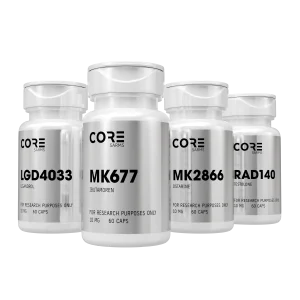
 Mass Stack
 Add to Cart


Related Articles
No related articles found.